
Understanding Your Bookkeeping Template: A Guide for Small Business Owners

Updated: Apr 9
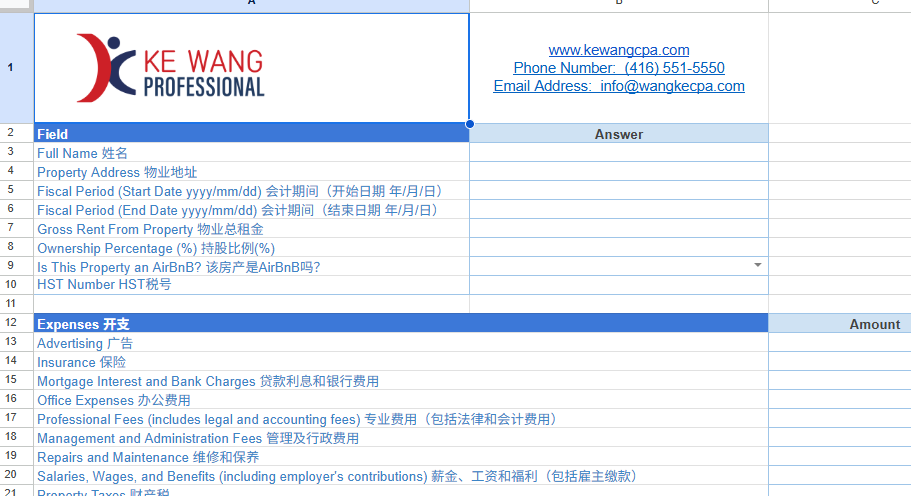
The Logic Behind the Bookkeeping Template
The core of this form is not just about "recording." It’s about:
👉 Enabling accountants to directly prepare financial statements and file taxes.
The entire file is actually divided into three main modules:
1️⃣ Where Does the Money Come From (Income)?
Sales List
2️⃣ Where Did the Money Go (Expenses)?
Bank statement
Business credit card
Personal card / cash
3️⃣ Special Fees (To Be Calculated Separately)
Home office
Automobile
Payroll
👉 Simply put, it can be summarized in one sentence:
💡 All inflows and outflows of money + clear categorization = taxable data
How to Fill Out a Bank Statement
This is the most crucial table.
✔️ What Do You Need to Fill In?
Every bank transaction should include:
Date
Description
Income/Expense
Category
✔️ How to Choose a Category?
Common classifications are as follows:
Rent
Utilities (water, electricity, and internet)
Office supplies
Professional fees (accounting/lawyer)
Advertising
Insurance
⚠️ Common Mistakes
❌ Not categorizing (most fatal)
❌ Writing all expenses as "Misc"
❌ Mixing income and expenses together
👉 The correct approach:
💡 Every transaction must have an "identity."
Business Credit Card Management
The logic is exactly the same as that of banks, but please note:
👉 Only record "credit card spending" here; do not record it to the bank again.
✔️ Fill in the Key Points
Only record consumption (not repayments).
Each item needs to be categorized.
Keep the receipt (the CRA audit team will check it).
⚠️ Common Mistakes People Make
❌ Do not treat "credit card repayment" as a fee.
👉 In reality:
💡 Repayment is just a transfer of funds, not an expense!
Personal Payments: When the Boss Pays Out of Pocket
This is an area that the CRA is very concerned about.
✔️ In What Situations Do I Need to Fill This Out?
Use a personal credit card to buy company items
Pay the company in cash
✔️ Why Is It Important?
👉 This money can be used for:
✅ Reimbursement (not considered income)
✅ Offset against company profits (reduces tax)
⚠️ What Happens If I Don't Keep a Record?
👉 Company underreports expenses → overpays taxes
Home Office Deductions
If you are working from home, this table can help you legally save on taxes.
✔️ Shared Costs:
Rent/Mortgage Interest
Utilities
Internet
Local tax (partial)
✔️ Core Computational Logic:
👉 Usable area ÷ Total area
For example:
1000 sqft home
200 sqft for office use
👉 Reportable percentage = 20%
⚠️ Note:
❌ Cannot be 100% accurate
❌ Cannot be estimated arbitrarily
Automobile Expenses
Applicable to:
👉 Using a vehicle for business trips, customer visits, or deliveries.
✔️ Requires Recording:
Total kilometers (KM)
Business KM
✔️ Fees Include:
Fuel costs
Insurance
Repairs
Depreciation
💡 Key Formula:
👉 Business KM ÷ Total KM = Reportable Ratio
Payroll Management
If you have employees or pay yourself a salary:
✔️ Required Fields:
Employee Name
Salary amount
Tax deductions (CPP / EI / Income Tax)
Payday
⚠️ The CRA Is Extremely Strict:
❌ Failure to record payroll
❌ Failure to remit on time
👉 A fine plus interest will be imposed directly.
Sales List: Tracking Your Income
This table determines how much tax you pay.
✔️ Fill in the Information:
Customer Name
Income amount
Date
Does it accept GST/HST?
⚠️ A Very Important Point:
👉 Income must match bank deposits!
Common Pitfalls for Business Owners
❌ 1. No Categorization
👉 Accounting is unavailable.
❌ 2. Duplicate Records
👉 Profits are magnified or reduced.
❌ 3. Forgot to Pay in Cash or Make Personal Payments
👉 Paying extra taxes for nothing.
❌ 4. Mileage (Vehicle) Not Recorded
👉 Vehicle expenses are basically wasted.
❌ 5. Incomplete Income Records
👉 CRA audit risk is extremely high.
By following these guidelines, you can ensure that your bookkeeping is accurate and compliant. Remember, clarity in your financial records not only helps with tax filing but also contributes to your long-term financial success. Embrace the process, and you’ll find it becomes easier over time!


Comments